
Section Repair
- Damage
- Around curbs, fans, and walk paths
- Exhaust Effects
- Softened membrane in a few spots
- Deck
- Solid, with surface rust at most
- Insulation
- Dry outside the repair areas
- Next Step
- Repairs during scheduled visits
Industrial Repair
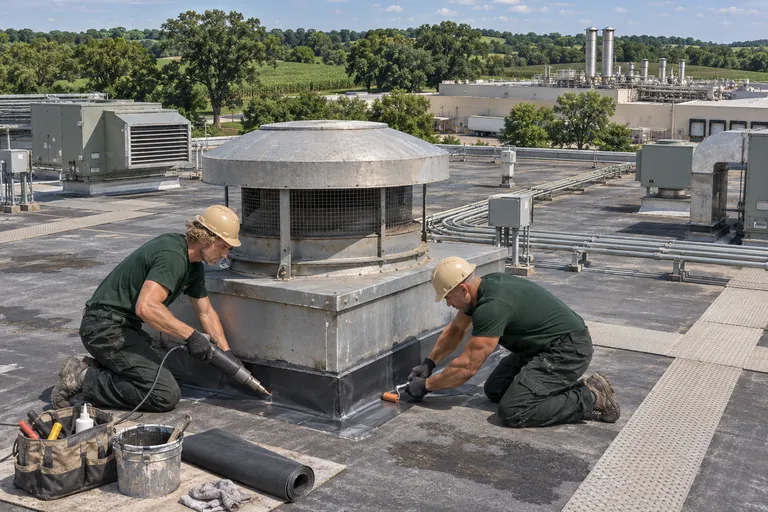
As an Omaha industrial roof repair contractor, we repair plant and warehouse roofs around exhaust fans, process curbs, and heavy equipment while production keeps running.
Repair Or Re-Roof
Omaha industrial roof repair keeps a large roof working section by section. These checks show when a section has moved past repair.
Plant Roof Signs
Plant roofs take wear that office roofs never see. These conditions come up most on Omaha industrial roofs.
Fan curbs vibrate, heat cycles the flashing, and grease or chemical exhaust softens some membranes around them.
Dozens of pipes, conduits, and equipment supports each carry a flashing that can crack or pull loose over time.
Trades crossing to equipment wear through membrane where walkway pads are missing or broken.
Drifts pile against parapets and taller roof sections, concentrating weight and meltwater in one area.
Screws, filters, and offcuts from equipment work clog drains and puncture the membrane underfoot.
Orange staining on the underside of the steel deck shows where water has been sitting above it.
Repair Benefits
Planned repair work keeps a plant roof predictable. These results come from fixing problems while they are still small.
Most repairs happen from the roof deck, with debris and work kept away from intakes and active areas below.
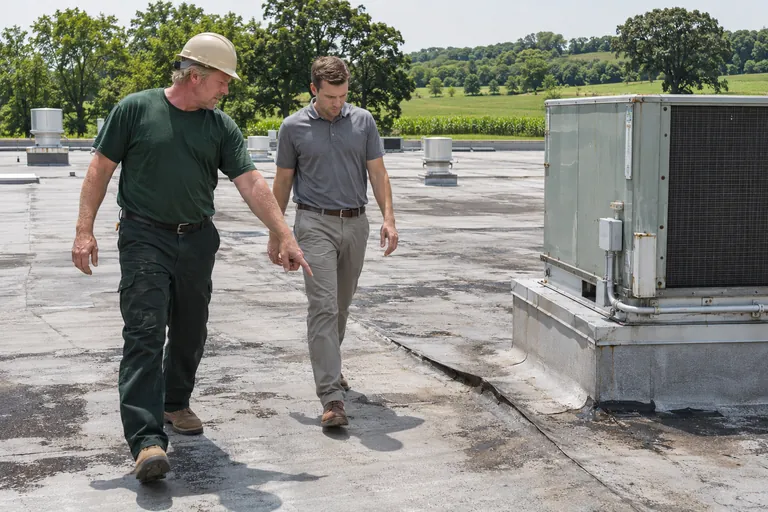
Each visit covers the surface, seams, flashings, drains, penetrations, and curbs, and you get a findings list with photos and priorities.
Spring and fall visits clear drains, check seams, reseal penetrations, and replace worn walkway pads.
Small repairs made during maintenance keep water out of the insulation and off the steel deck.
Work is planned with plant staff for lockouts, intake shutoffs, and sanitation zones before anyone goes up.
Snow Load
Call with the address. After big snowfalls we check drifts, open drains so meltwater can leave, and look inside for framing deflection.
(402) 833-7489Call UsRepair Steps
Industrial repairs start with a conversation with plant staff. Here are the five steps from planning to the findings list.
Intakes, exhaust stacks, lockouts, and sanitation zones are reviewed with plant staff so roof work stays clear of production and people below.
Seams, flashings, drains, and every penetration and curb are checked, with moisture meter or infrared readings over suspect areas.
From the plant floor or a lift, we check for stains, deck rust, and drips that line up with the roof findings.
Membrane, flashing, and panels are repaired with matching material, and protection is added where exhaust lands on the roof.
You get a written list with photos, repair priorities, and items to watch until the next visit.
Related Repairs
Most plants combine roof types. These services cover the rest of the building.
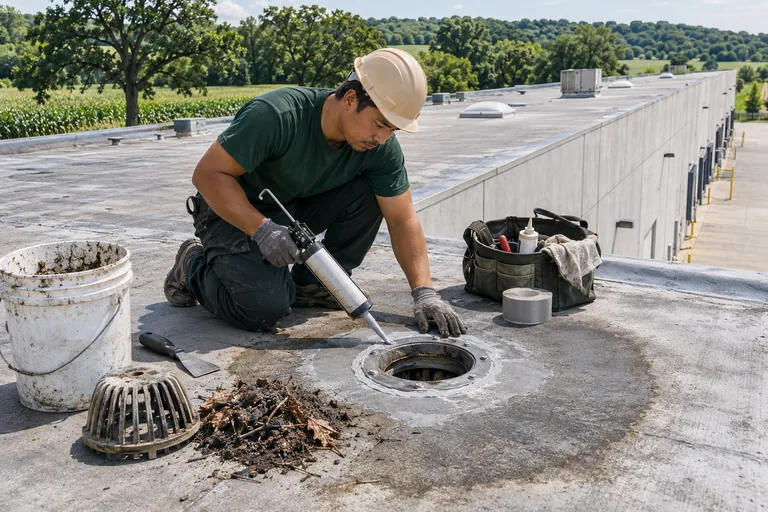
Office wings and dock roofs with membrane get drain, lap, and blister repairs on the same schedule.
See flat roof repair →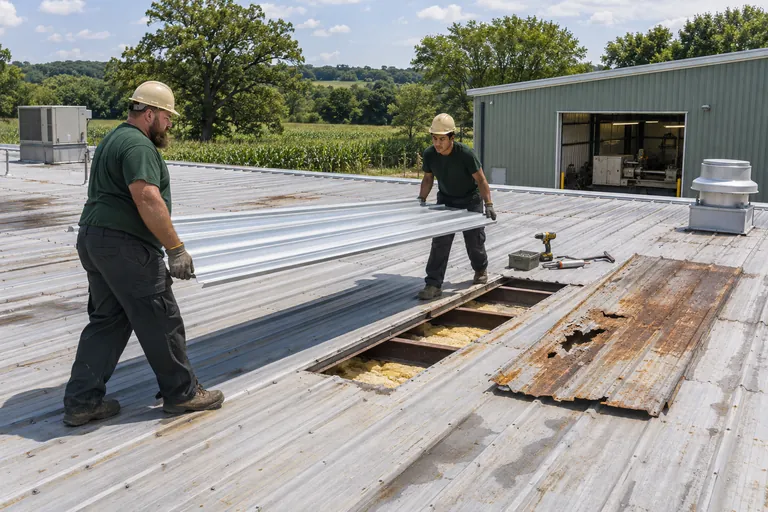
Metal warehouse sections get new fasteners, resealed laps, and replacement panels in the matching profile.
See commercial metal roof repair →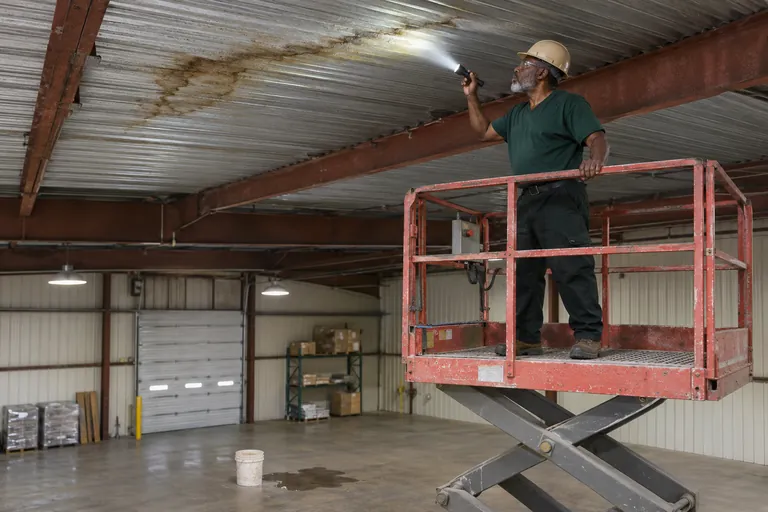
Stains over production lines get traced to the roof before anything above them is opened.
See commercial roof leak repair →Questions
Answers for facility managers planning plant roof work.
The entry point is found first, then the membrane, flashing, or panel is repaired with matching material. Plant roofs carry many penetrations, heavy curbs, and process exhaust, and each one is a possible leak point. Repairs are scheduled around production, and debris stays clear of intakes and active areas below.
Fan curbs vibrate constantly and heat cycles the flashing until it cracks. Grease and chemical exhaust also soften some membranes. The fix is new curb flashing, replacement membrane around the curb, and protection where exhaust settles. Fan housings and curb caps get checked for gaps at the same time.
Drains and gutters are cleared, seams and flashings checked, penetrations resealed, and debris left by other trades removed. Walkway pads near equipment are checked and replaced where worn. Visits in spring and fall catch winter and storm damage before it leaks, and small fixes made on the spot keep water out of the insulation.
The surface, seams, flashings, drains, penetrations, and equipment curbs are walked and noted. Blisters, punctures, ponding, rust, and failed sealant are recorded, and a moisture meter or infrared scan checks for wet insulation. Inside, stains and deck rust are noted. You receive a written list with photos and priorities.
Snow adds weight, and drifts concentrate it against parapets, walls, and higher roof levels. Ice at drains and gutters backs meltwater up under flashing and seams. After big snowfalls, drifts and drains get checked, drains are opened so water can leave, and framing is checked from inside for deflection.
Grease and some chemical exhaust break down certain membranes, which turn soft or sticky around the outlet. Protective pads or a compatible membrane in the landing zone keep the residue off the main sheet. Cleaning the area on maintenance visits slows the damage and shows whether the protection is working.
Most do. Foot traffic from equipment trades, exhaust residue, vibration at curbs, and heavy snow drifts at taller sections all wear a plant roof faster than a plain office roof. Spring and fall visits are a common rhythm, with an extra check after any major storm or after contractors work on rooftop equipment.
Next Step
Tell us about the plant, the roof, and any production limits. We plan the repair around them and send you the findings.