
Flat Roof Repair
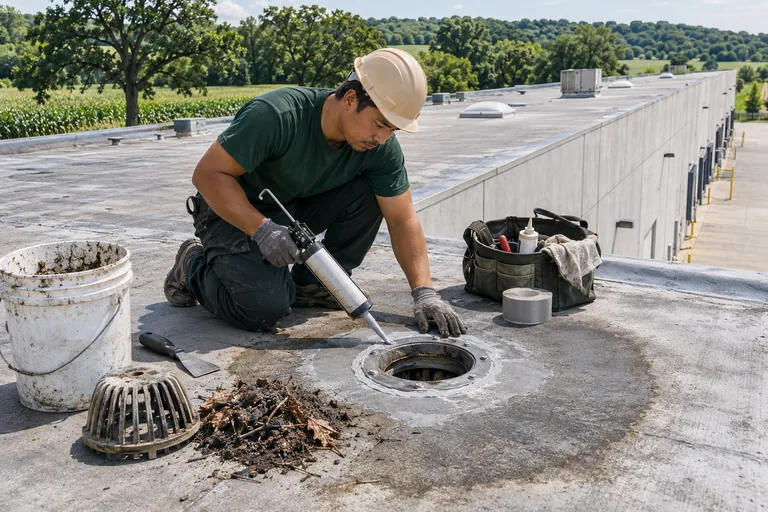
Flat roofs with winter-clogged drains and loosened wall flashing.
See flat roof repair →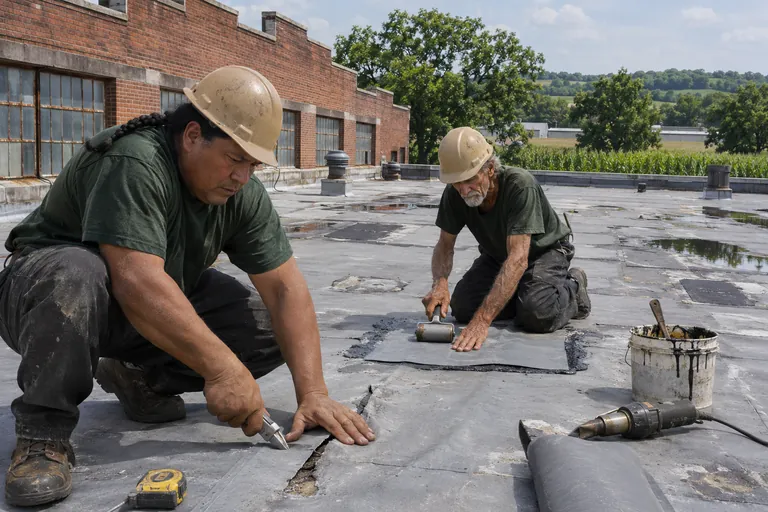
Lyons, Nebraska
As a Lyons commercial roof repair contractor, we check roofs each spring for winter damage and repair drains, flashing, seams, and edges before summer storms.
Spring Checks
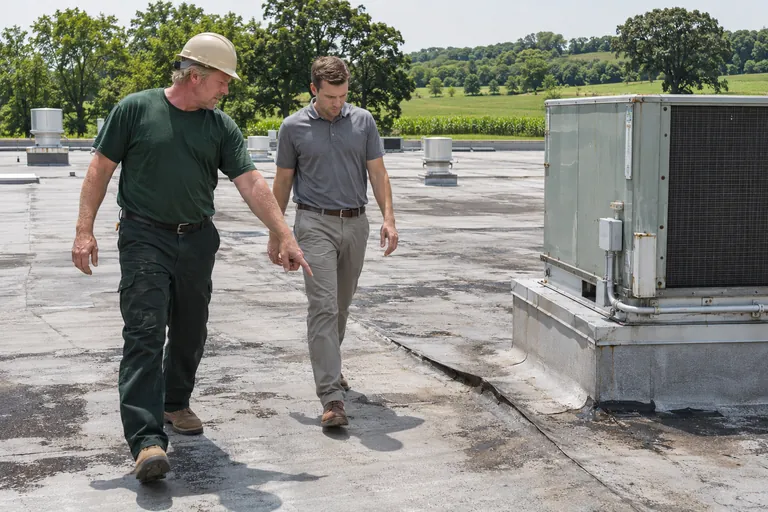
Lyons commercial roof repair visits peak after winter. Ice and snow loosen flashing, pack debris into drains, and open seams along roof edges, and the first heavy spring rains find those spots.
A spring check catches them first. We clear drains, test flashing and seams by hand, and look inside for new stains, then repair what we find while the openings are still small and before insulation gets wet.
After Winter
These are the spring findings that most often turn into summer leaks.
Leaves and grit frozen into strainers over winter still block water when the spring rains arrive.
Ice forming behind flashing at walls pries it away from the parapet a little more each freeze.
Freeze and thaw cycles work laps loose along the roof perimeter and at corners.
Snow loads and ice can shift curb flashing around rooftop units and open a gap at the base.
Skylight domes crack and their curb seals dry out over winter, and the first warm rain finds the gap.
New ceiling stains in March or April point to damage that winter left behind on the roof.
Spring Benefits
Repairing winter damage in spring keeps it from growing through the summer. Here is what that early work protects.
Clear strainers and resealed drain bowls move summer downpours off the roof instead of up into seams.
Sealing a lap in April keeps months of storms from soaking the insulation board under it.
Fixing a few loose flashings and seams in spring is a smaller job than replacing wet insulation in fall.
A spring visit each year builds a photo record of the roof's condition for planning bigger work.
Repairs made in April leave summer storms fewer openings to find, which means fewer calls about water on the floor.
Repair Services
Spring findings lead to one of these four repair services.
Flat roofs with winter-clogged drains and loosened wall flashing.
See flat roof repair →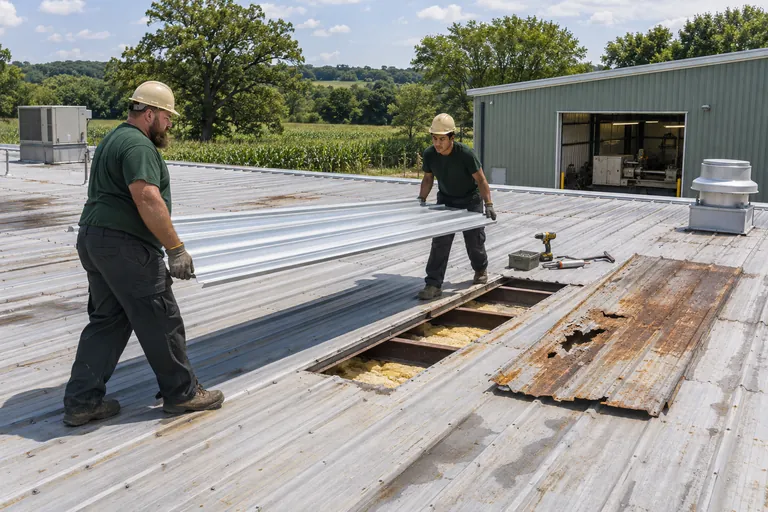
Metal roofs with fasteners and laps worked loose by freeze and thaw.
See commercial metal roof repair →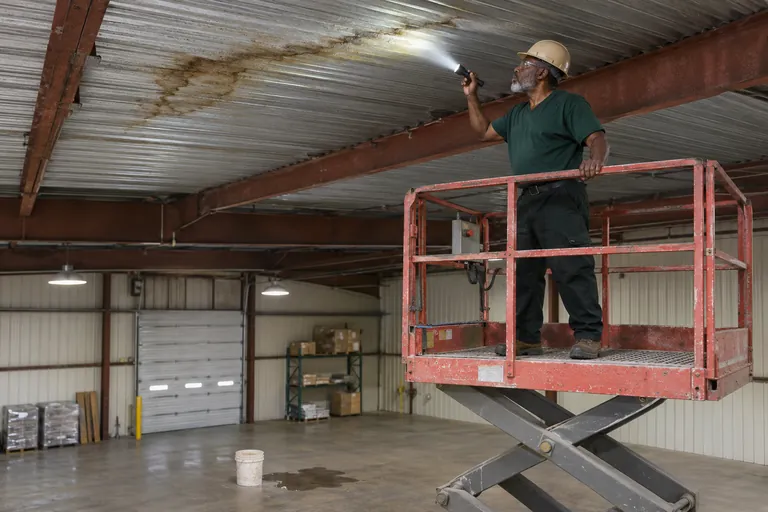
First-rain stains traced back to the opening winter created.
See commercial roof leak repair →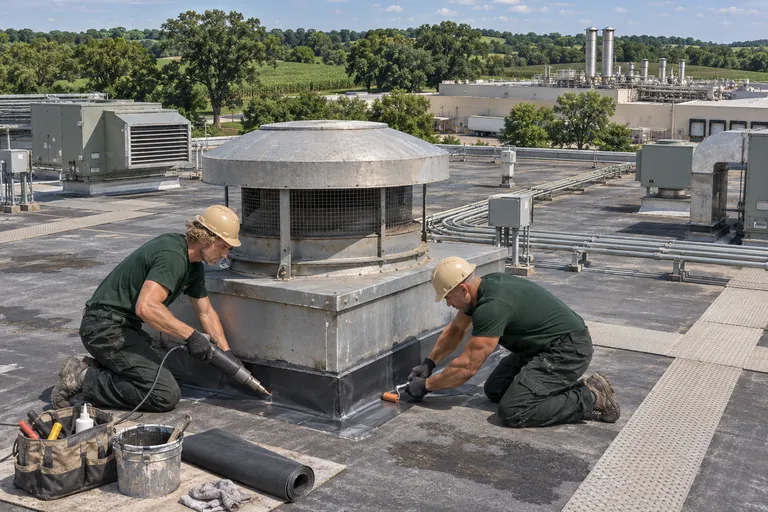
Plant roofs with drift damage around fans, curbs, and walkways.
See industrial roof repair →Leak Help
Call with the address. A spring stain usually means winter opened something, and it is easier to repair now than after summer storms.
(402) 833-7489Call UsRepair Steps
Four steps make up a spring visit, from drains to the findings list.
Strainers come off, debris comes out, and each drain is checked for flow and a tight seal at the bowl.
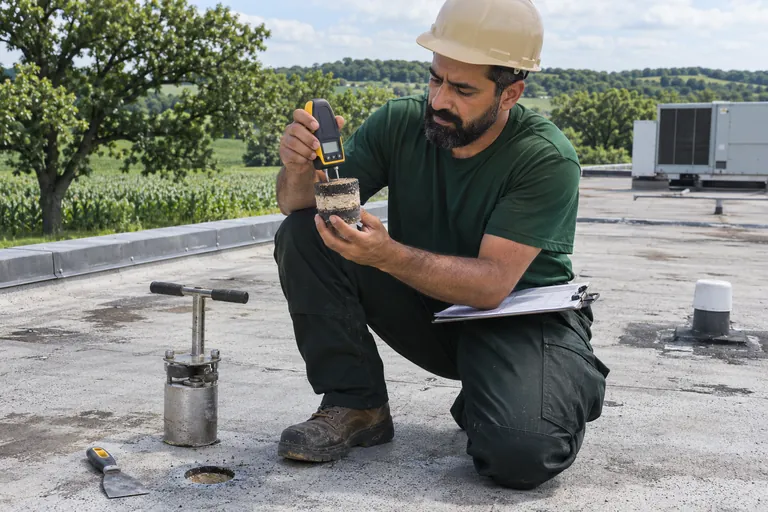
Wall flashing, edge metal, and seams are checked by hand and with moisture readings where ice sat through the winter.
Ceilings and deck undersides are checked for new stains that line up with what the roof showed.
Loose flashing, open seams, and lifted edges are repaired, and you receive photos with the findings list.
Anything that needs a warmer day or a bigger repair goes on a short list with a suggested order, so it can be done before storm season.
Nearby Towns
Lyons is on our list of towns served from Omaha. If your building is elsewhere, call us or send us a message and we will tell you if it is within reach.
Home base for flat, metal, leak, and industrial repairs.
Warehouse and light-industrial roofs, priced line by line.
Repairs scheduled around businesses that stay open.
Storm checks and temporary seals until the permanent fix.
Storage buildings with rust starting under the panels.
Questions
Answers for Lyons owners planning a spring roof check.
Drains, gutters, seams, flashings, and the curbs around rooftop equipment. Winter ice and snow loosen flashing and fill drains with debris. After the first heavy rains, look inside for new stains. A spring inspection by a commercial roofing crew finds open seams and lifted edges before summer storms do.
Lyons is on our regular list of towns, so a call or message sets up the visit. Mention whether you want a spring check or have an active leak, since leaks get a temporary seal first and the full check after.
Ask which roof system they found, how the repair ties into it, and whether they will photograph the work. Ask how wet insulation was measured, since that decides between a patch and a bigger repair.
Many can. Drain clearing, fastener work, and mechanical flashing repairs go ahead in cool weather. Heat-welded and adhered patches wait for dry days above the product's minimum temperature. We plan the visit so cold-weather work happens first and adhered patches follow on the next mild day.
Frozen water stays put. When it melts and spring rain adds to it, water finally reaches the openings that ice created at flashing, seams, and drains, and the stains appear inside. That is why a spring check matters even when the roof stayed dry all winter.
For most commercial roofs, yes. One visit catches small winter damage before it reaches the insulation, and the yearly photos build a record of the roof's condition over time. It also gives you a baseline to compare against after the next hail storm.
You get a findings list with photos of every drain, flashing, and seam that needed attention, the repairs made on the visit, and any items to watch through summer. The list is short when the roof came through winter well.
Get Started
Book a spring check or report a new leak. We clear, test, and repair what winter left behind and send photos.