
Single Leak Repair
- Source
- One seam, curb, drain, or panel
- Insulation
- Wet only under the entry point
- Pattern
- Same spot, same kind of rain
- Cause
- Wear, storm damage, or a failed detail
- Next Step
- Repair and water test
Leak Repair
As an Omaha commercial roof leak repair contractor, we trace water from where it shows inside to where it enters, then repair that spot.
Patch Or Plan
Omaha commercial roof leak repair fixes one entry point at a time. Sometimes the trace shows a wider problem, and the checks below separate the two.
Leak Patterns
How a leak behaves tells us where to look first. Match what you see inside to the rows below.
It is a warning sign. Leaks that show only in downpours usually come from water backing up at drains or rising over a low seam.
Water near a unit traces to cracked curb flashing, missing panel screws and gaskets, or a blocked condensate line.
Hail cracks membrane, splits seams, and breaks skylights and vent caps; bruised spots can hold for months before failing.
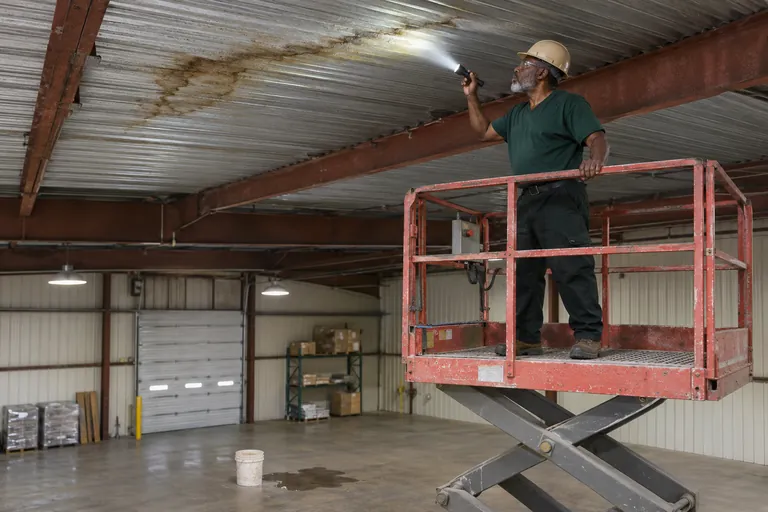
High ceilings let water run along purlins and joists, so stains on the floor can sit far from the hole above them.
Cracked domes and dried curb seals at skylights leak in steady rain and get resealed or reflashed.
Meltwater trapped behind ice at drains and gutters backs up under flashing and shows as winter leaks on dry days.
Repair Benefits
Stopping a leak at its entry point protects more than the ceiling tile. These are the parts of the building it keeps dry.
Water that keeps entering soaks insulation and rusts the steel deck; sealing the entry point early keeps that damage small.
Pallets, machinery, and electrical panels under the drip stop needing tarps, buckets, and shutdowns.
Photos of marked storm damage and each repair give your adjuster a clear record of what happened and when it was fixed.
Repairs from above let food plants and warehouses keep running, with heat or adhesive work timed for planned shutdowns.
Office ceilings, drywall, and flooring stop staining once the roof above them is closed.
Active Leak
Call and tell us where it lands. Move or cover what you can, catch the water, and keep people and cords away from wet floors.
(402) 833-7489Call UsRepair Steps
Leak repair is detective work followed by a roof repair. The steps below run in this order.
Stains, drips, and wet spots are marked inside, from a lift where ceilings are high. We note when the leak starts and stops compared with the rain.
Those marks are matched to the roof above, and seams, penetrations, skylights, curbs, and drains upslope are checked first.
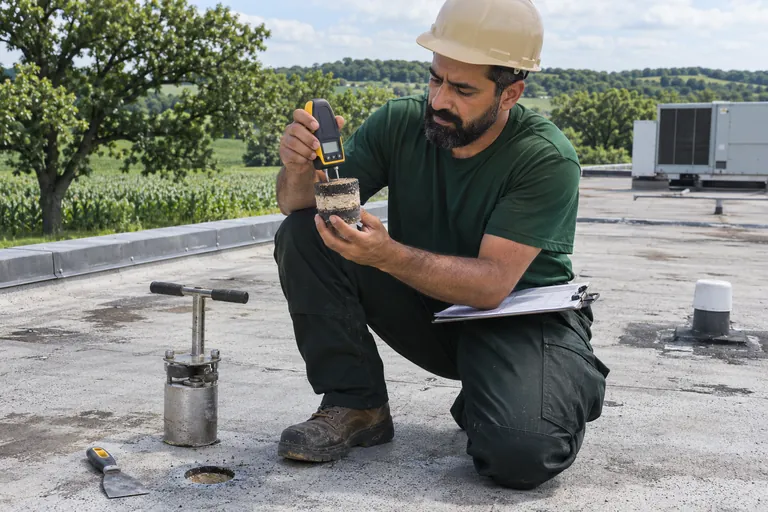
Moisture meters, infrared scans, or a controlled water test on one section at a time confirm the entry point before anything is cut.
The failed seam, flashing, or panel is repaired with matching material, and wet insulation under it is replaced.
A follow-up water test or the next rain confirms the fix, and you receive photos of the repair with notes on anything else found.
Related Repairs
Once the entry point is found, the fix falls under one of these services.
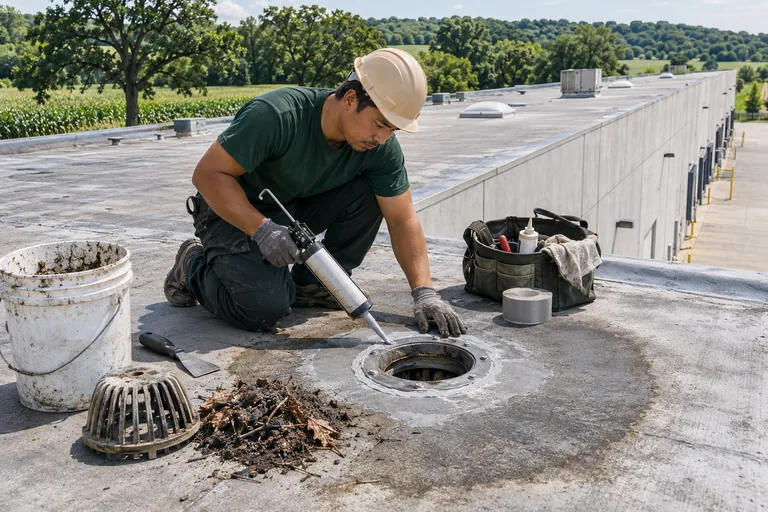
Leaks traced to a drain, lap, or wall flashing on a membrane roof get a flat roof repair with matching patch material.
See flat roof repair →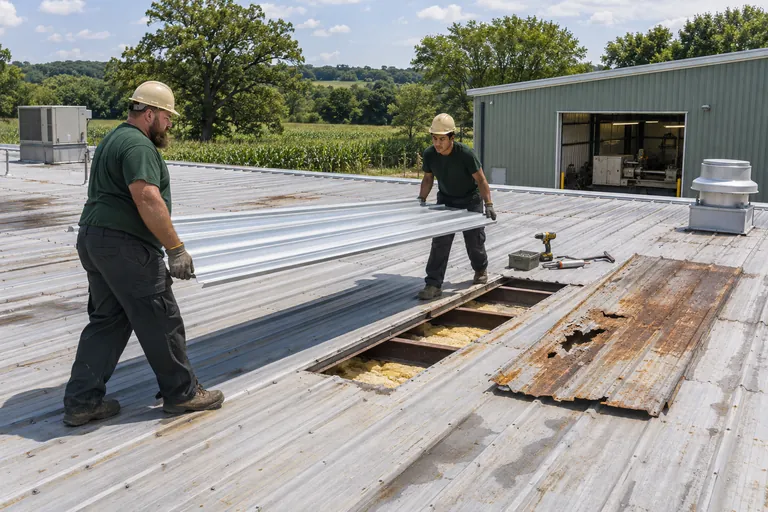
Drip lines under screw rows or panel laps get new fasteners, fresh sealant, or replacement panels.
See commercial metal roof repair →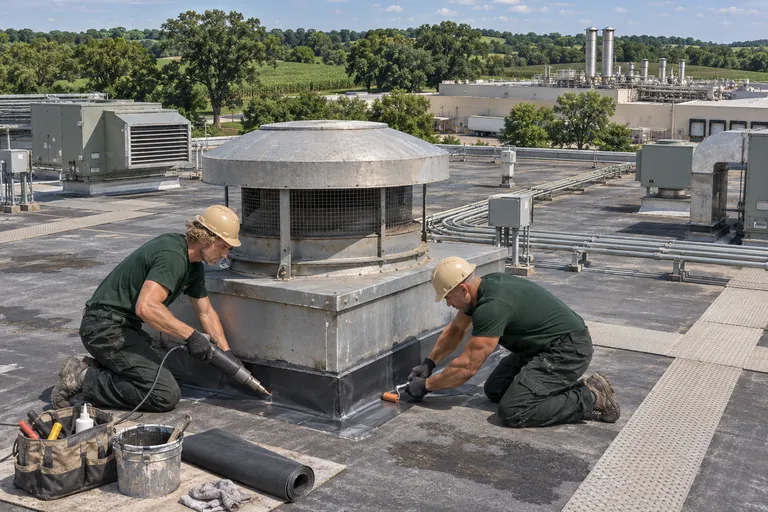
Entry points at fan curbs and process penetrations on a plant roof get industrial repairs planned with plant staff.
See industrial roof repair →Questions
Answers to the leak questions Omaha owners ask before calling.
No. A roof that stays dry in light rain but leaks in downpours has a weak point that only goes underwater when the level rises. Backed-up drains, gutters, and scuppers, or a seam or flashing sitting low, are the usual causes. These leaks tend to grow, so treat the first one as a warning.
Wet spots, stains, and drips are mapped from the floor and a lift, then matched to the roof above. Seams, penetrations, skylights, and drains upslope of each mark get checked first. Water can run along purlins and joists before it falls, so the entry point is often well away from the puddle on the floor.
Three places cause most of these leaks: curb flashing cracked or pulled loose by vibration, unit panels missing screws or gaskets, and a blocked or broken condensate line. Each one gets checked, because a roofing repair will not stop water coming through the equipment itself.
Hail cracks membrane, splits seams, and breaks skylights, vent caps, and drain strainers. Bruised membrane can look fine and then fail months later. After a hail storm the whole roof surface is inspected, every damaged spot is marked, and each one is repaired and photographed for your records.
In most cases, yes. Roof crews work above the building envelope and rarely need an opening into the plant. Work is coordinated with plant staff around air intakes, exhaust stacks, and sanitation zones, and any heat or adhesive work near intakes is timed for a scheduled shutdown.
Torn membrane and open seams come first, because they let water in immediately. Loose edge metal and coping follow, since wind can peel more roofing from under them. Debris punctures, cracked skylights, and damaged drains come next. Temporary seals hold until the roof is dry enough for permanent repairs.
Next Step
Tell us where the water shows and when it leaks. We trace it to the source, repair it, and send you the photos.