
Patch and Repair
- Wet Area
- Limited to the spots around the leak
- Membrane
- Still flexible at the laps and edges
- Leak Count
- One or a few, each with a clear cause
- Drains
- Working once cleared or reset
- Next Step
- Targeted repair on this visit
Flat Roof Repair
As an Omaha flat roof repair contractor, we fix leaking laps, failed drains, blisters, and ponding on TPO, EPDM, built-up, and modified bitumen roofs.
Patch Or Replace
Omaha flat roof repair starts with one question: how much of the roof is still dry? The answer decides between a patch and replacing the section.
Flat Roof Signs
These are the conditions behind most flat roof leaks we trace. The tag shows how soon each one needs attention.
Rings of dirt mark where water sits after rain. We clear the drain, then build up the low area with tapered insulation or a cricket so water moves on.
Lifted seam edges on TPO and EPDM let water run straight under the sheet whenever that part of the roof floods.
Trapped moisture swells in summer heat; split or growing blisters get cut out, dried, and patched before they tear further.
Base flashing pulling away from parapet walls leaks only when water rises against it, which is why it hides between storms.
Leaves, gravel, and broken strainers back water up over seams it was never meant to reach.
Aged sheets that crack when bent or pull at corners point toward replacement planning rather than more patches.
Repair Benefits
A well-placed repair stops the leak and keeps the rest of a flat roof working. These gains come from fixing the cause instead of the stain.
Resetting a high drain or replacing a cracked strainer and clamping ring gets water off the roof before it finds a seam.
Catching an open lap early keeps the board stock under it from turning into a soaked section that has to come out.
Heat-welded TPO patches and EPDM cover tape join the existing sheet, so the repair moves with the roof through heat and cold.
Flat roof work happens on top of the building, so offices, stores, and floors below keep their normal hours.
Repair notes and moisture readings show how long patching still makes sense before replacement belongs in the budget.
Ponding Help
Call with the building address. Standing water around a drain usually means a clog or a drain set too high, and both are repairable once we see them.
(402) 833-7489Call UsRepair Steps
Flat roof repairs follow the water from where it shows inside back to where it enters. Five steps, in order.
We note where water lands and how the leak behaves in light rain versus downpours. A drip that appears only in hard rain points to a drain or a low seam.
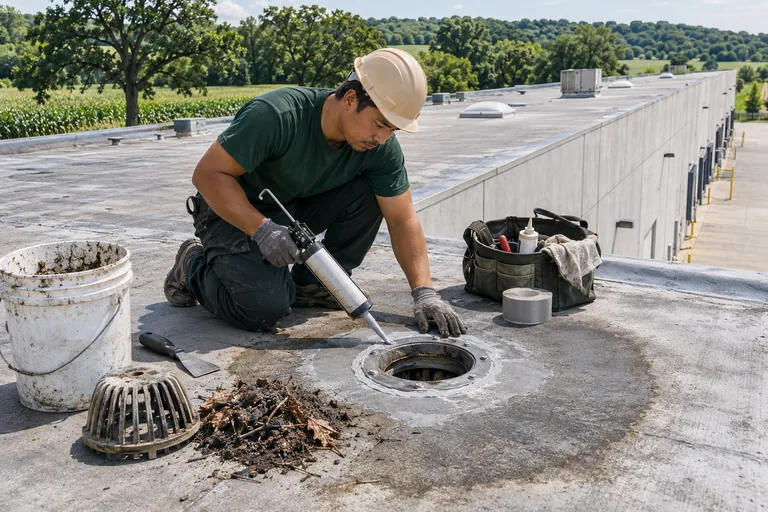
Strainers come off, debris comes out, and each drain bowl and clamping ring gets checked. A clear drain often ends the leak by itself.
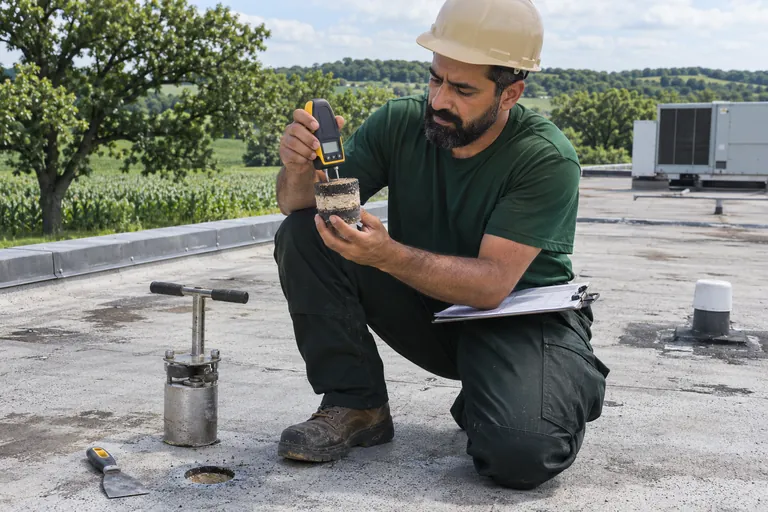
Every lap, wall flashing, and pitch pan upslope of the stain gets probed for openings, then moisture readings show how far water spread.
Wet insulation under the leak is cut out and replaced, and the membrane is patched with matching material: welded TPO, taped EPDM, or mastic and fabric on built-up roofs.
Where the source was unclear, a controlled water test confirms the fix. Each repaired spot is photographed for your records.
Related Repairs
Flat roof leaks often sit next to other problems. These services handle what we find around them.
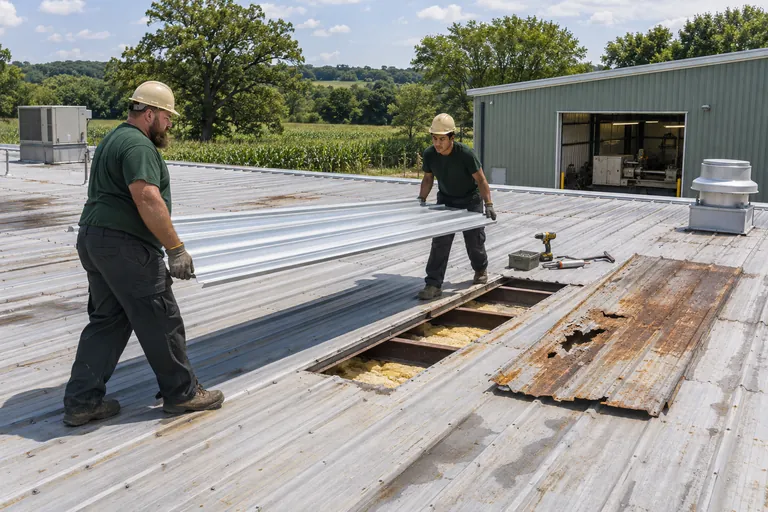
Buildings with a metal section over the shop or warehouse get fastener and lap repairs on the same visit as the flat roof.
See commercial metal roof repair →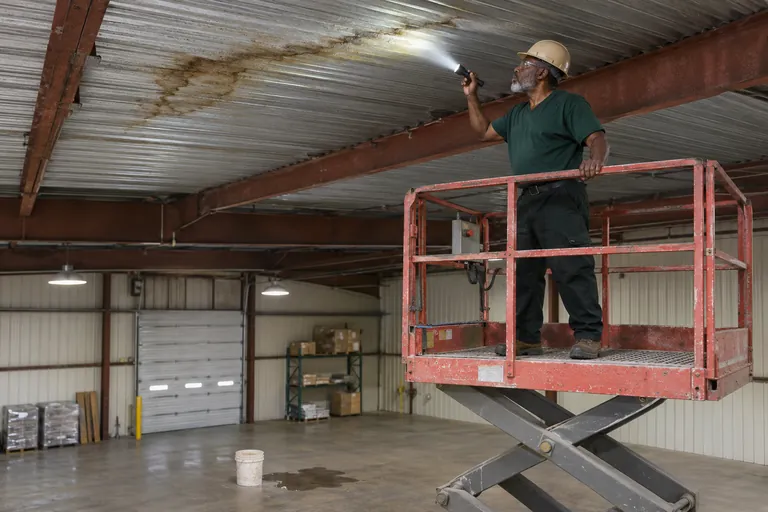
When the stain inside does not line up with anything visible on the roof, a leak trace finds the path the water takes.
See commercial roof leak repair →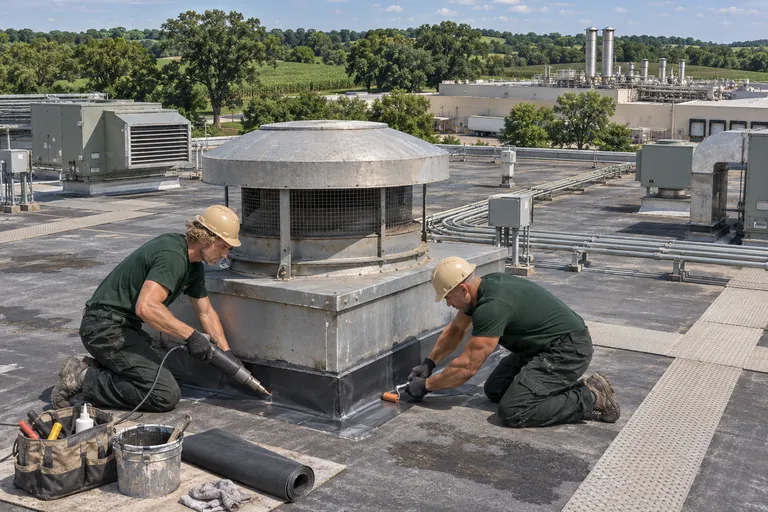
Plants with exhaust fans and process curbs on a flat roof need repairs timed around production and intakes.
See industrial roof repair →Questions
Answers to the flat roof questions that come up most often.
Heavy rain raises the water level on a flat roof until it reaches seams and flashing that sit above the normal waterline. Clogged drains, scuppers, and low spots make that rise worse.
Open laps, cracked wall flashing, and split pitch pans are the usual entry points, and clearing drains plus resealing at the high-water line ends most of these leaks.
Drainage comes first: clogged drains get cleared and sunken or high drains get reset. Low areas can be built up with tapered insulation or a cricket so water moves toward a drain.
Membrane softened by standing water is cut out and patched. If a sagging deck causes the ponding, a structural check comes before any roofing work.
A patch fits when damage is limited to a few spots and core cuts show dry insulation around them.
Replacement fits when wet insulation covers large areas, the membrane has turned brittle or shrunk, or many seams are failing at once. We count the leak sources and map moisture across the roof before recommending either one.
It starts with clearing debris and replacing broken strainers and clamping rings, then resealing the membrane to the drain bowl.
Drains that sit higher than the surrounding roof get lowered or fitted with a sump so water can reach them. A cracked drain bowl or a leaking pipe joint below the deck also needs a plumber.
Moisture or air trapped under the membrane expands in summer heat and lifts it. Closed, small blisters are watched over time.
Ones that split, sit in a walk path, or keep growing get cut open, dried, and patched. Blistering that keeps coming back points to wet insulation or weak adhesion underneath and calls for a larger repair.
Price follows the size of the damaged area, the roof system, and how much wet insulation has to come out. Resealing one seam is a small job; replacing a saturated section is a larger one.
Roof height, access, rooftop equipment, drain work, and the weather window add to it. Each repair is priced after the inspection.
Next Step
Tell us where the water shows and what kind of flat roof you have. We trace it, repair it, and send you the photos.